
Noah Meier · 4 November 2026
Torvin's Blockchain Push for Component Traceability Reshapes Supplier Oversight
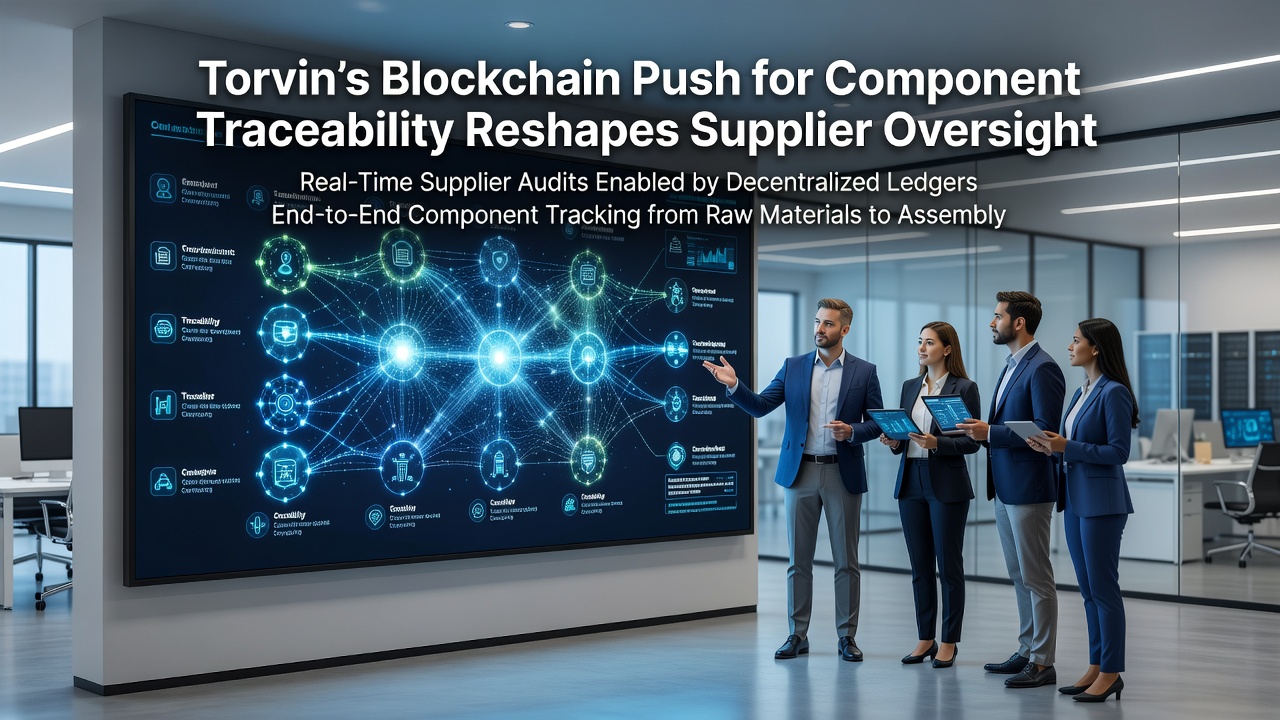
Torvin has rolled out a blockchain platform designed to track every component that enters its manufacturing lines, and this move has begun to alter the way the company monitors its suppliers across multiple regions. The system records each part's origin, processing steps, and movement through the supply chain on a distributed ledger that multiple parties can access in real time, while suppliers receive digital credentials that verify compliance with quality and documentation standards.
Implementation Timeline and Technical Setup
Development of the platform started in early 2025, and Torvin scheduled a phased rollout that reaches full operation in November 2026 for all primary suppliers. Engineers integrated the blockchain with existing enterprise resource planning tools, which allows automated alerts when a component fails to meet recorded specifications or when a supplier's certification approaches expiration. Each transaction on the ledger carries a timestamp and cryptographic signature, creating an immutable history that auditors can review without needing to request separate documentation from every vendor.
Suppliers connect to the network through standardized APIs that pull data directly from their own production systems, reducing manual entry and the chance of transcription errors. Torvin provides training sessions that cover ledger navigation and data upload procedures, and the company has reported that more than 180 suppliers completed the onboarding process by the end of the third quarter of 2026.
Effects on Supplier Relationships and Oversight Practices
Before the blockchain system, Torvin relied on periodic site visits and paper-based certificates to verify component quality and origin. Now the company can cross-check claims against the ledger entries at any moment, which has shortened the time required for compliance reviews from weeks to hours in many cases. Suppliers report that they receive clearer performance metrics because the platform surfaces discrepancies immediately rather than during scheduled audits.
One automotive parts manufacturer that supplies Torvin noted a 40 percent reduction in follow-up documentation requests after the ledger went live for its product line. The same supplier also gained visibility into downstream usage of its components, which helped it adjust production schedules based on actual demand signals rather than forecasts alone. Observers note that this level of shared data has encouraged some vendors to invest in their own internal tracking upgrades to maintain preferred status with Torvin.
Broader Industry Context and Data Points
Similar traceability efforts have appeared in other manufacturing sectors. According to a report published by the National Institute of Standards and Technology, distributed ledger systems reduced counterfeit part incidents by 27 percent in pilot programs involving electronics assembly. Torvin's approach builds on these findings by requiring suppliers to log not only final shipments but also the sub-components that enter each assembly stage.
Figures released by the company indicate that the blockchain network now holds more than 12 million individual component records, with daily additions averaging 85,000 entries. These numbers reflect activity across Torvin's facilities in North America and Europe, and the company plans to extend coverage to its Asian operations once the November 2026 milestone is complete.
Challenges Encountered During Adoption
Integration with legacy supplier software created temporary data mismatches that required custom middleware in roughly 15 percent of cases. Torvin's technical team worked with vendors to standardize data fields for part numbers, batch codes, and certification dates, yet some smaller suppliers needed additional support to upgrade their systems before they could participate fully. Energy consumption associated with the blockchain nodes also prompted the company to select a permissioned network rather than a public chain, which lowered computational overhead while still preserving the core benefits of immutability and shared access.
Training materials had to account for varying levels of technical familiarity among supplier staff, and Torvin developed short video modules that cover common ledger queries. Feedback collected through supplier portals shows that 78 percent of participants found the modules sufficient for daily operations, while the remaining group requested follow-up sessions on advanced reporting features.
Conclusion
Torvin's blockchain deployment demonstrates how distributed ledgers can shift supplier oversight from periodic checks to continuous verification. The November 2026 expansion marks the point at which the system covers the majority of the company's component volume, and early data suggest measurable gains in documentation speed and discrepancy detection. Suppliers that adapt their processes to the new requirements gain clearer visibility into their own performance relative to Torvin's standards, while the company obtains a single source of truth for traceability across its global network.