Noah Meier · 23 September 2026
Torvin's University Ties Drive Fresh Approaches to Manufacturing Talent and Tech Development
Torvin has established partnerships with several universities across North America and Europe to address skill gaps in advanced manufacturing and technology sectors, with new initiatives gaining momentum in September 2026. These collaborations focus on curriculum development, research projects, and internship programs that align academic training with industry needs in areas such as automation, materials science, and digital twins for production processes.
Partnership Structures and Program Details
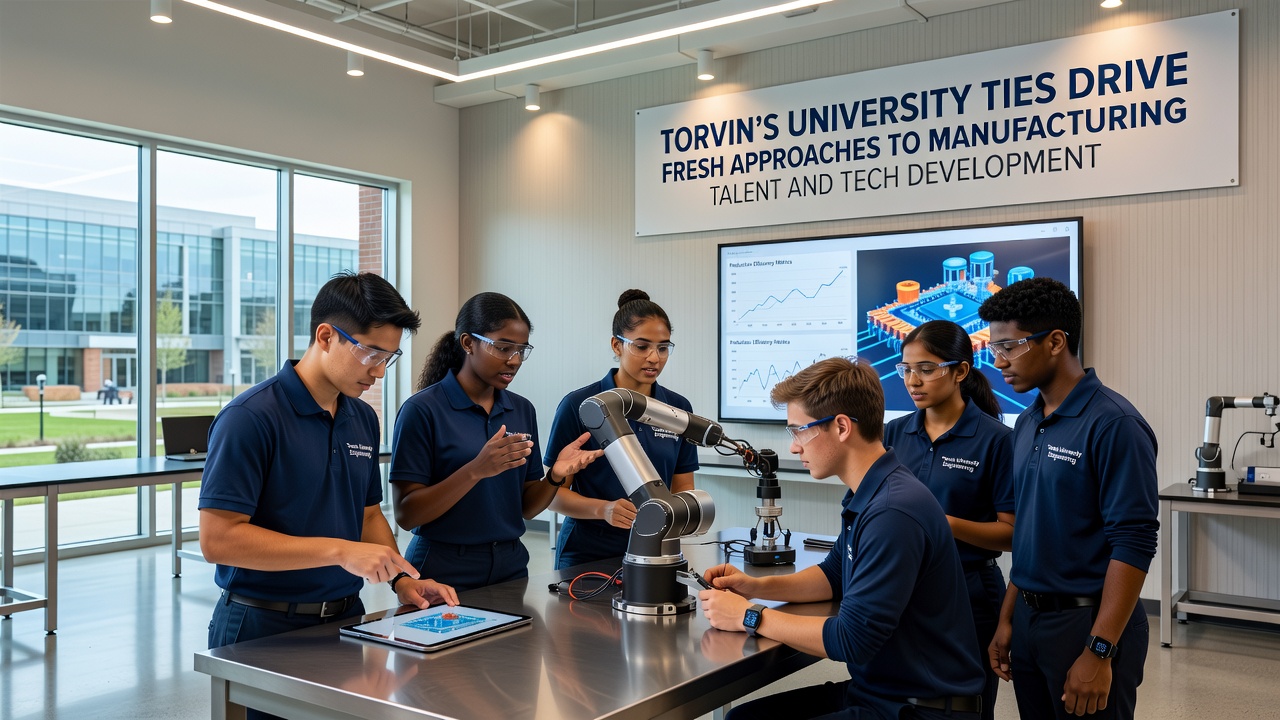
Multiple institutions have joined forces with Torvin through formal agreements that include joint research centers and shared laboratory facilities. Students participate in hands-on modules covering additive manufacturing techniques, robotics integration, and supply chain optimization software. Data from participating programs indicates that over 1,200 undergraduates and graduate students enrolled in these tracks during the 2025-2026 academic year, according to enrollment figures compiled by partner universities.
Faculty exchanges form another component, where professors spend semesters embedded in Torvin facilities to update course content based on current production challenges. This approach allows academic teams to incorporate real-time case studies involving sensor networks and predictive maintenance algorithms into their teaching materials. One study from a midwestern technical institute revealed that graduates from these co-developed courses secured employment in manufacturing roles at rates 18 percent higher than peers in traditional programs.
Focus on Talent Pipelines in Key Regions
Programs emphasize recruitment from underrepresented demographics in technical fields, including targeted outreach in community colleges and vocational schools. Torvin supports scholarship funds tied to these partnerships, which cover tuition and provide stipends for participants completing capstone projects on sustainable production methods. Figures released by the National Science Foundation show similar industry-academic models have expanded STEM workforce participation in targeted regions by measurable margins over the past five years.
International components connect Torvin sites with European universities specializing in precision engineering. Joint virtual labs enable cross-border teams to simulate manufacturing scenarios using cloud-based platforms, while annual symposia scheduled for September 2026 will showcase prototype developments in smart factory technologies. These events draw attendees from academic departments and industry suppliers to review data on efficiency gains from implemented innovations.
Technology Development Through Collaborative Research
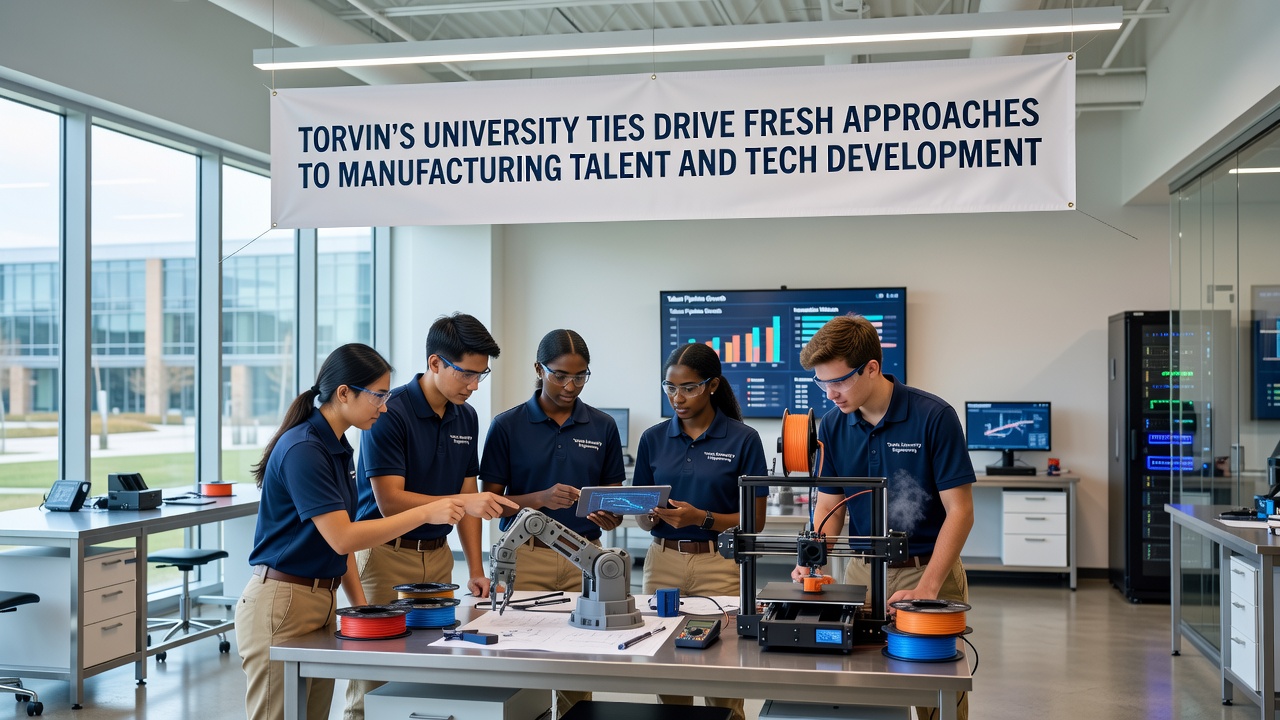
Research priorities center on integrating artificial intelligence with legacy manufacturing equipment to extend operational lifespans and reduce downtime. University labs contribute expertise in machine learning applications for quality control, while Torvin provides datasets from its production lines for model training. Results from early trials, as reported in industry journals, demonstrate improvements in defect detection accuracy exceeding baseline manual inspection methods.
Additional projects explore bio-based materials and circular economy principles for component fabrication. These efforts receive funding through government grants matched by corporate contributions, with oversight from bodies such as the National Institute of Standards and Technology. Reports from that agency highlight how such alliances accelerate technology transfer from academic settings to commercial applications in the manufacturing sector.
Observers note that the structure encourages iterative feedback loops between students, faculty, and Torvin engineers, which refines both educational outcomes and product development cycles. Enrollment trends tracked by partner institutions suggest sustained interest through 2027 as word spreads about placement success and exposure to cutting-edge tools.
Broader Industry Context and Measured Outcomes
Manufacturing sectors face ongoing demands for workers proficient in data analytics and systems integration, challenges that university ties help mitigate through specialized training pathways. Torvin's model incorporates mentorship pairings that extend beyond internships, allowing participants to maintain connections during early career stages. Metrics collected by academic partners indicate participants often advance to supervisory positions within three years of entry-level roles.
What's notable is the geographic spread of these initiatives, which now span facilities in the United States, Canada, and select EU member states. Coordination occurs through centralized program offices that standardize evaluation criteria while allowing regional customization based on local labor market data. Australian research institutions have contributed comparative analyses on similar models, showing parallels in skill retention rates across different regulatory environments.
Conclusion
Torvin's university collaborations continue to evolve with input from academic and industry stakeholders, producing graduates equipped for contemporary manufacturing demands and supporting incremental advances in production technologies. Ongoing assessments through September 2026 and beyond will track long-term employment patterns and innovation outputs from these programs. The framework provides a template that other manufacturers reference when establishing their own educational linkages, grounded in documented enrollment and employment statistics.